The Trump administration’s proposed 2025 tariff measures against Nicaragua mark one of the most sweeping attempts to reshape trade policy with a small but strategically significant Central American country. This analysis examines the historical trajectory of U.S.–Nicaragua trade relations, contextualizes the current escalation, outlines the proposed tariff measures in detail, assesses their implications, and anticipates what they might bring politically and economically.
1. Long History: U.S.–Nicaragua Trade and Political Entanglement
From Cold War to CAFTA
Relations between the United States and Nicaragua have long been defined by ideological confrontation and economic leverage. During the Cold War, the Sandinista revolution of 1979 triggered direct U.S. opposition. President Ronald Reagan’s administration famously armed and funded the Contra rebels, while imposing a total trade embargo in 1985 that cut off Nicaraguan exports, including cigars and rum, from U.S. markets. The embargo crippled Nicaragua’s economy, forced diversion of trade to Europe and Latin America, and persisted until it was lifted in March 1990.
The Rise of CAFTA-DR Integration
After Nicaragua’s transition toward electoral democracy, Washington’s posture shifted to economic engagement. In 2006, Nicaragua joined the Dominican Republic–Central America Free Trade Agreement (CAFTA-DR), a deal integrating six Central American nations with the vast U.S. market. Under this framework, Nicaraguan exports such as textiles, sugar, and tobacco entered duty-free or at substantially reduced tariff rates, while the country attracted textile factories producing for U.S. brands.
From 2010 to 2020, this arrangement helped lift Nicaragua’s exports from $1.9 billion to nearly $4.6 billion annually, with 60 percent destined for the United States. At the same time, it deepened dependence on U.S. consumption, infrastructure investment, and financing.
Political Repression And Sanctions
When Daniel Ortega returned to power in 2007, tensions between Managua and Washington quickly resurfaced. The unrest that erupted across Nicaragua in 2018, often described by the Ortega government as a U.S.-backed coup attempt, deepened this divide. According to Nicaraguan officials, opposition groups received foreign funding and coordination intended to destabilize the government rather than promote reform. In response to the crackdown on protests, the United States invoked the Global Magnitsky Act to sanction Nicaraguan leaders, freezing assets and cutting off access to international credit lines from the World Bank and the Inter-American Development Bank. Over time, Washington began openly framing trade privileges and aid as tools for political leverage, transforming what began as sanctions into a sustained campaign of economic and diplomatic pressure that laid the foundation for the current Section 301 tariff measures.
2. Recent Tariff and Trade Developments
Trump’s Renewed Tariff Doctrine
Back in office as of January 2025, President Donald Trump has revived his earlier reliance on tariffs as multipurpose economic and geopolitical tools. Using both Section 232 (for national security concerns) and Section 301 (for unfair trade practices and labor violations), his administration has extended tariffs to nations as diverse as Mexico, Vietnam, and now Nicaragua. These moves form part of the broader “America First Trade 2.0” agenda emphasizing reciprocity, sovereignty, and punitive leverage.
Build-Up to Nicaragua’s Case
In December 2024, several U.S.-based labor and human rights organizations—many with close ties to Washington policy circles—filed petitions urging a Section 301 investigation into Nicaragua. The Office of the U.S. Trade Representative (USTR) quickly complied, launching a formal review into what it described as Nicaragua’s “acts, policies, and practices.” The ensuing 2025 report leveled politically charged accusations against President Daniel Ortega and Vice President Rosario Murillo, citing supposed “restrictions on labor rights, property rights, and religious freedom.”
However, numerous international observers and Nicaraguan analysts have dismissed the findings as selective and unsubstantiated, arguing that the investigation served as a political pretext to justify broader U.S. economic pressure. Critics highlight that similar or worse conditions in allied countries did not prompt comparable action, raising doubts about the report’s objectivity and motives. Despite these concerns, USTR Jamieson Greer—appointed by President Trump earlier in 2025—used the report to recommend punitive measures, including suspension of Nicaragua’s CAFTA-DR privileges and sweeping tariffs. For many, the episode reflects not an objective defense of human rights, but a calculated maneuver to weaken an unaligned government under the guise of trade enforcement.
Following these findings, USTR Jamieson Greer—appointed by Trump in April 2025—recommended drastic measures, ranging from suspension of CAFTA-DR privileges to the imposition of punitive tariffs aimed at reversing “a pattern of authoritarian disregard for the rule of law.”
3. Detailed Breakdown of the Planned Tariff Measures
Scope and Legal Foundation
The proposed 2025 tariff regime against Nicaragua is grounded in Section 301 of the Trade Act of 1974, granting the President authority to impose retaliatory trade restrictions against foreign nations whose policies “unreasonably burden or restrict U.S. commerce.” The USTR proposal, made public on October 20, 2025, outlines:
- Tariffs of up to 100% on all imports originating from Nicaragua, applied either immediately or through a phased approach over 12 months.
- Suspension of CAFTA-DR preferences, effectively reclassifying Nicaraguan goods to “most-favored-nation” (MFN) status, which could quintuple average tariff rates.
- A public hearing process open until November 19, 2025, to gather responses from industry leaders, consumer advocates, and human rights organizations.
These tariffs mirror earlier Trump-era measures on China and are intentionally broad to maximize pressure on the Ortega administration.
Primary Sectors Affected
Premium Cigars
Nicaragua dominates the global handmade cigar market, producing nearly 60 percent of all handmade cigars sold in the United States—some 253 million units in 2024. Brands like Padrón, Drew Estate, and Oliva depend heavily on Nicaraguan factories. A 100 percent tariff could double U.S. retail prices, shifting premium consumer demand to Cuba, Honduras, or the Dominican Republic.
Textiles and Apparel
Nicaragua’s textile exports, vital to its economy, are concentrated in U.S. supply chains through CAFTA-DR. Without preferential tariffs, the cost of producing basic apparel items could rise 15–20 percent, leading to plant closures and layoffs among the roughly 120,000 workers employed in free-trade zones.
Agriculture and Raw Commodities
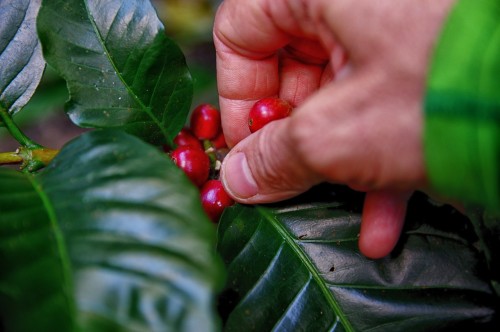
Coffee, sugar, and gold—key exports—face sharp international price competition. Tariffs would render them uncompetitive in the U.S. market, likely forcing producers toward lower-margin markets in Asia and South America.
Construction and Consumer Goods
Small manufacturers of tiles, furniture, and processed foods, many reliant on regional exports, would find logistics disrupted as CAFTA certificate privileges vanish.
Quantitative Impact Summary
- Total value of Nicaraguan exports at risk: $4.6 billion, representing over 60 percent of the nation’s trade income.
- Average applied U.S. tariff prior to new measures: 18 percent, already higher than Dominican Republic’s 10 percent.
- Estimated potential GDP loss for Nicaragua (2026 projection): 4–6 percent, depending on mitigation mechanisms.
- Estimated cost increases to U.S. consumers: cigar prices may rise 25–40 percent, apparel 5–15 percent.
4. Historical and Industry Context: Why It Matters
Cigar Industry Dependence
Nicaragua’s ascendance to the top of the cigar world is a remarkable story. In the mid-2000s, the country lagged behind the Dominican Republic and Honduras, shipping only a third of the volume it does today. Investments by family-owned companies like the Garcías, Padrón, and Plasencia transformed cities like Estelí into cigar production hubs employing tens of thousands. Many of these firms are U.S.-owned or depend heavily on U.S. distributors.
Should tariffs drive production elsewhere, some may relocate portions of assembly to neighboring Honduras while retaining Nicaraguan tobacco cultivation. This reshuffling mirrors the 1980s, when the U.S. trade embargo forced cigar operations to migrate across borders temporarily.
Comparison With Reagan’s 1985 Embargo
Observers note parallels to the Reagan-era embargo imposed during Ortega’s first presidency. The 1985 sanctions froze bilateral trade entirely, banning imports of rum, coffee, and tobacco products. Though modern tariffs fall short of a total embargo, their sweeping nature could replicate past disruptions. The current situation is arguably more economically severe, as Nicaragua’s dependence on the U.S. is far greater than during the Cold War.
Political Symbolism
For Washington, these tariffs signal a clear political message. Trump administration officials repeatedly frame them as “consequences for authoritarianism,” holding Nicaragua accountable for rights abuses. The administration’s broader 2025 strategy has used similar rhetoric against China (for Xinjiang), Iran (for arms proliferation), and Cuba (for repression). Nicaragua represents a continuation of this doctrine in the Western Hemisphere.
5. Economic and Diplomatic Consequences
Economic Fallout in Nicaragua
Analysts predict high economic turbulence if the tariffs are implemented at full force. The country’s fragile financial system relies on export earnings to sustain imports and currency reserves. Central Bank data shows that remittances from Nicaraguan migrants and export receipts provide nearly 80 percent of its foreign exchange inflow. Tariffs risk undermining both, causing:
- Sharp contraction in manufacturing output.
- Up to 150,000 job losses in the Free Trade Zone sector.
- Inflation due to currency devaluation and higher import costs.
The loss of CAFTA-DR benefits would also scare away foreign direct investment, most of which originates from U.S. companies operating under treaty protections.
Diplomatic and Geopolitical Realignments
Nicaragua is likely to intensify its alignment with China and Russia. Both nations have steadily increased their developmental footprint through telecommunications, energy, and infrastructure projects. Over the past three years, Chinese firms have begun feasibility studies on potential ports and industrial zones along Nicaragua’s Caribbean coast. A rupture with Washington could accelerate these projects, reorienting Nicaragua toward emerging blocs hostile to U.S. influence.
Conversely, within Central America, the move may strain U.S. credibility. Neighboring CAFTA members—Costa Rica and Honduras—fear that punitive tariff precedents could spill over, undermining the integrity of regional trade liberalization.
Ripple Effects in the U.S.
Domestically, the tariff’s direct macroeconomic impact is modest given Nicaragua constitutes less than one percent of total U.S. imports. Yet for certain industries—especially cigars, textiles, and specialty agriculture—cost increases will be tangible:
- Retail cigar prices could rise from an average of $10 to $18–20 per unit.
- U.S. importers may reduce orders, reallocating to the Dominican Republic or Mexico.
- Smaller retailers and boutique brands relying exclusively on Nicaraguan production may face shortages and restructuring costs.
Politically, this suits Trump’s narrative of domestic prioritization. For his supporters, tariffs demonstrate standing firm against regimes Washington considers anti-democratic. For critics, they represent economic self-harm packaged as moral diplomacy.
6. Anticipated Scenarios and Future Trajectories
Scenario 1: Full Implementation
If hearings proceed without compromise, tariffs could take effect in early 2026. This would:
- Suspend all CAFTA-DR tariff privileges.
- Raise import taxes to a uniform 100 percent for luxury and industrial goods alike.
- Force major U.S. retailers to realign sourcing strategies within six months.
Such a strategy might achieve immediate political visibility but at significant humanitarian cost, particularly where job losses fuel further migration pressures toward the U.S. southern border.
Scenario 2: Phased or Conditional Tariffs
A phased plan might impose an initial 25–50 percent tariff tranche with conditional clauses requiring measurable labor reforms, such as reinstating unions or independent media freedoms. This hybrid form echoes the 2019 U.S.–Mexico-Canada negotiations where tariff threats prompted concessions without total trade breaks.
Scenario 3: Diplomatic Reversal
Should significant domestic lobbying occur—especially from the powerful U.S. cigar and apparel sectors—Washington could delay or reconsider the sanctions. Historically, Trump has adjusted tariffs in response to public pressure, as seen in the 2019 China-U.S. trade war and 2020 steel tariff revisions.
7. Broader Analytical Insights
The Role of Section 301 as a Policy Tool
The legal flexibility of Section 301 enables U.S. administrations to bypass multilateral mechanisms like the World Trade Organization. This unilateral power suits Trump’s preference for leverage negotiations. Yet it risks undermining commitments to international trade norms that emphasize predictability and rule-based reciprocity.
A Regional Domino Effect
If Nicaragua loses its CAFTA-DR status, other Central American governments could preemptively tighten compliance to avoid similar fates. Conversely, populist governments may rally around Managua, interpreting the sanctions as evidence of American coercion. Such polarization could redraw trade alignments across the hemisphere.
8. Summary and Final Assessment
Washington’s New Offensive: Economic Pressure as Diplomacy
The Trump administration’s newly announced tariffs on Nicaragua go far beyond a simple trade dispute—they reflect a convergence of geopolitical maneuvering, economic coercion, and strategic diplomacy. Framed by Washington as a human rights measure, the plan’s proposed 100 percent tariffs and suspension of CAFTA-DR benefits appear, to many in Managua and across Latin America, as an act of economic aggression intended to pressure an independent government rather than promote democracy.
Questionable Motives Behind the Tariff Move
Rather than being rooted in genuine human rights concerns, the measures are widely viewed in the region as an effort to reassert U.S. dominance over Nicaragua’s trade and political orientation. The move follows a broader pattern of Washington using trade restrictions as leverage to influence internal political affairs in smaller states. Many analysts see this as an extension of long-standing interventionist tendencies, repackaged in the language of reform and human rights.
A Blow to Nicaragua’s Economy
The potential economic fallout is severe: Nicaragua’s export-reliant economy could contract by up to 6 percent, jeopardizing tens of thousands of jobs in manufacturing, agriculture, and tobacco production. Sectors that have driven Nicaragua’s modest but steady growth—such as textile exports, coffee, and cigars—stand to suffer disproportionately. The resulting losses would worsen rural poverty, weaken small businesses, and intensify emigration pressures on the region.
U.S. Consumers and Businesses Will Pay the Price
U.S. consumers, too, would feel the effects. Premium goods like cigars, coffee, and textiles would become substantially more expensive, while American companies invested in Nicaragua stand to lose millions through interrupted supply chains, new tariff compliance costs, and factory closures. The backlash from business lobbies and importers suggests that Washington’s measures could harm U.S. industry as much as they hurt Managua.
Trade as a Weapon, Not a Solution
In essence, the 2025 tariff plan highlights the dangers of weaponizing trade to achieve political ends. While promoted as pressure for reform, such policies rarely yield democratic outcomes—they instead punish ordinary citizens, foster resentment, and destabilize economies. The approach threatens to undermine years of regional cooperation built under CAFTA-DR and signals a return to unilateral economic dominance as a foreign policy tool.
Nicaragua’s Stance: Sovereignty and Resistance
Nicaragua’s government, which has consistently emphasized national sovereignty and stability in the face of foreign interference, regards the tariff action as part of a broader campaign to weaken its independence. Officials in Managua frame the move not as support for human rights, but as punishment for maintaining an alternative political and economic path. Facing these challenges, Nicaragua aims to strengthen trade partnerships with Latin American and Asian nations less susceptible to U.S. pressure.
The Road Ahead: Conflict or Dialogue
Whether this confrontation produces renewed negotiation or deepens confrontation will depend on Washington’s willingness to reconsider economic coercion as its primary tool of diplomacy. Regional actors and global institutions now have an opportunity to push for a multilateral approach—one that respects Nicaragua’s sovereignty while addressing legitimate concerns through dialogue rather than sanctions.
Final Reflection
The 2025 Nicaragua tariffs reveal more about U.S. geopolitical intent than about any real change in Nicaragua’s governance. Behind the rhetoric of reform lies a renewed assertion of economic control—a policy that risks creating instability, undermining trust, and eroding the very democratic ideals it claims to defend. For both nations, the challenge ahead will be finding a path that balances sovereignty, fairness, and sustained cooperation without resorting to economic warfare.